Thomas Range - Locale Spotlight
Let’s talk about the Thomas Range in Utah
Because if you collect minerals, this place has probably crossed your path — even if you didn’t realize it at the time!
At first glance, it’s easy to underestimate. Low desert hills. Wide open space. Not exactly screaming “world-class crystal locality”!
And yet… wow.
This open stretch of western Utah has produced some of the cleanest, sharpest, most satisfying crystals in the U.S. Pieces that don’t need hype or storytelling to stand out. They just do!
Ever pick up a specimen and immediately think, yep — this one’s staying?
That feeling? That’s the Thomas Range effect!
Crisp topaz with edges that catch the light just right. Red beryl that stops you mid-scroll because your brain needs a second to register what it’s looking at. Crystals that feel balanced, intentional, and — honestly — just really fun to collect.
It’s not loud.
It’s not flashy.
But once you learn to recognize material from the Thomas Range, you start seeing it everywhere… quietly anchoring some of the most memorable American mineral specimens out there… Let’s dig in (get it, dig in)!
Where the Thomas Range Is
So where is the Thomas Range, exactly?
Western Utah.
Out in Juab County.
Right in that wide-open, high-desert stretch where the land feels calm, quiet, and a little unassuming.
This is not the kind of place that stops you in your tracks visually. No dramatic alpine peaks. No lush scenery. Just low volcanic hills, dry air, and a whole lot of space. The kind of landscape you could drive past without a second thought… if you didn’t know better!
And that’s part of the charm.
Because the Thomas Range doesn’t look like a world-class mineral locality — and yet it absolutely is. The crystals come from ancient volcanic rock, scattered across a range that feels modest in scale but wildly productive in the right pockets.
It’s a reminder that in mineral collecting, appearances can be deceiving. Some of the most important localities aren’t the loudest or the prettiest — they’re the ones quietly doing their thing, year after year, while collectors pay attention!
Would you think this place produced the best topaz in the world if your drove past it?

Why the Thomas Range Actually Matters to Collectors
Alright… here’s where things get fun!!!
Because the Thomas Range isn’t just “another locality with crystals.” It delivers a very specific look — and once you see it, you can’t unsee it.
Collectors love consistency. Not boring consistency, but recognizable consistency!
Material from the Thomas Range tends to feel clean, deliberate, and well-behaved in the best possible way. Crystal faces are sharp. Forms make sense. Even smaller pieces often feel complete, like they knew exactly what they were trying to be.
Ever notice how some specimens feel chaotic… and others feel calm?
Thomas Range material almost always lands in that second category!!!
And here’s a subtle detail collectors really appreciate:
a lot of these crystals are associated with rhyolite.
Visually, that’s a big deal!
Rhyolite is usually pale and understated, which creates incredible contrast when sharp, glassy crystals grow in or on it. Topaz pops harder. Red beryl looks even more dramatic. Every edge and termination reads clearly because the matrix isn’t fighting for attention.
That contrast is a big part of why Thomas Range specimens photograph so well, display so cleanly, and just feel right on a shelf.
Another reason this locality matters? Reliability.
When collectors talk about American topaz or red beryl, the Thomas Range often becomes the quiet reference point — the mental baseline people compare other pieces to, whether they realize it or not.
And that’s huge.
It means you’re not just picking up a crystal. You’re engaging with a locality that has earned trust over decades of collecting. One that keeps producing specimens people are genuinely excited to own — not because they’re trendy, but because they hold up.
That’s why the Thomas Range keeps showing up in serious collections.
Again. And again. And again!!! Tell me you wouldn’t want this in your cabinet?

The Volcanic Setting
Alright! Quick geology moment.
The Thomas Range sits within an ancient volcanic field dominated by rhyolite, and honestly… this explains a lot once you know what to look for.
Rhyolite tends to form in a way that creates space.
Small pockets.
Open cavities.
Room for crystals to grow without being crushed or distorted.
And when crystals are given that kind of breathing room?
They show off!!!
Sharp edges.
Clean faces.
Terminations that actually look intentional instead of half-formed.
If you have ever handled specimens that feel a little cramped or chaotic, you know exactly what this looks like. Growth fighting growth. Faces overlapping. Form getting lost.
That is not what usually happens here.
Crystals from the Thomas Range often feel calm and readable. The geometry makes sense. The growth feels steady. Nothing looks rushed or forced. You can trace faces with your eye and actually enjoy doing it!
Visually, rhyolite does something else really important.
It stays subtle.
Because the matrix is usually pale and understated, it lets the crystal take center stage. Glassy topaz pops harder. Red beryl stands out immediately. Every edge and termination becomes easier to appreciate because nothing is competing for attention.
That is why Thomas Range specimens tend to display so well.
They feel balanced.
They feel finished.
They feel right!!!
For collectors, this volcanic setting translates into material that is honest and satisfying. Clean growth. Clear form. Crystals that do not need explaining because they speak for themselves.
Now let’s dig a little deeper into the material this volcanic powered locale produces…
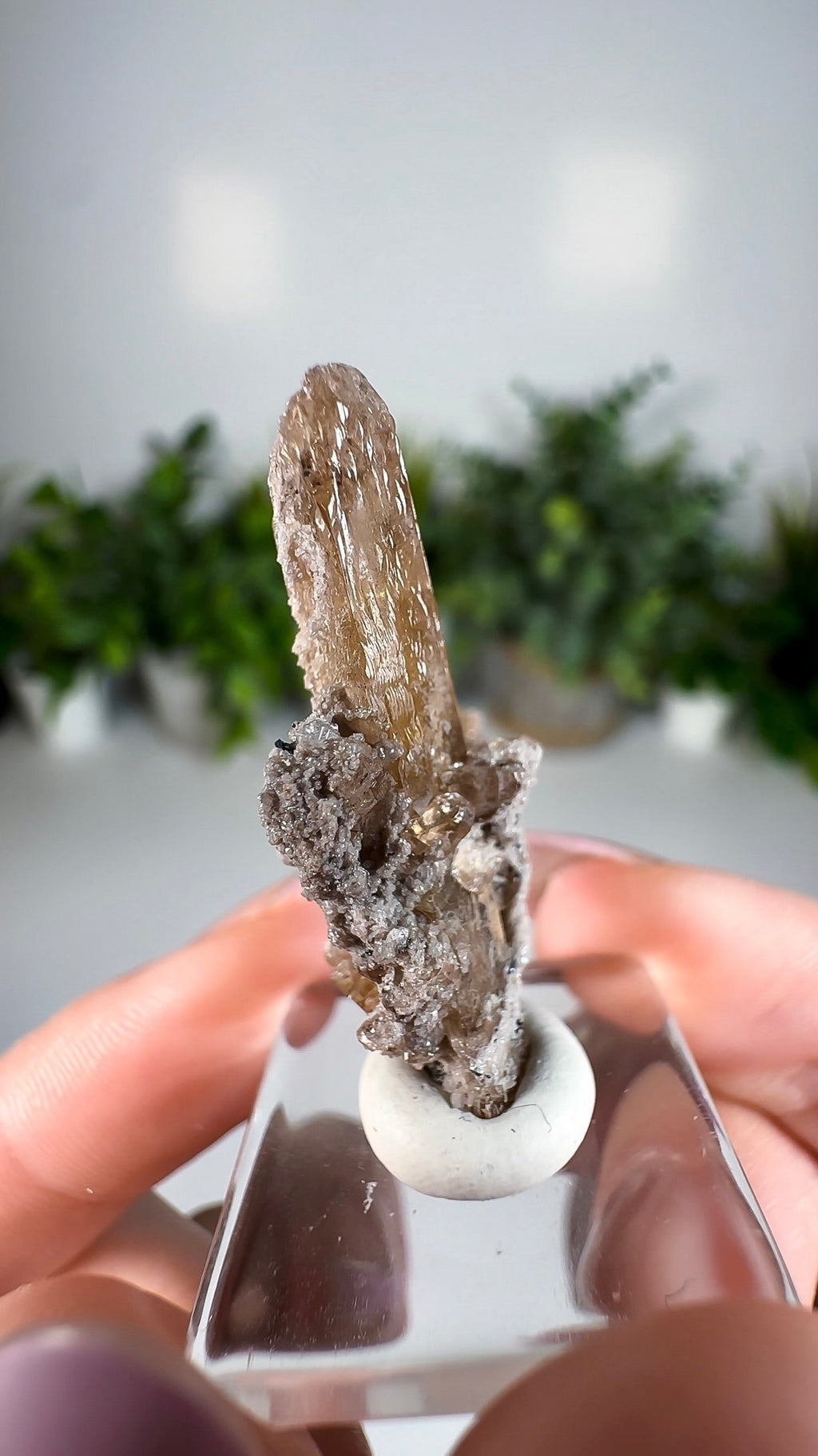
Thomas Range Topaz
Okay… this is where most people fall in love!!!
When collectors talk about the Thomas Range, they are very often talking about topaz. And for good reason. This locality has produced some of the most instantly recognizable American topaz specimens out there.
Topaz from this area is still just topaz, no variety tricks or fancy naming. What sets it apart is how cleanly it grows here.
The crystals tend to form with crisp edges, sharp terminations, and faces that reflect light beautifully. Nothing feels muddled. Nothing feels busy. You can actually read the crystal form without effort, which is a huge part of the appeal.
Ever picked up a topaz and thought, wow, this one is just clear in what it is trying to show?
That is the Thomas Range look!!!
Color can range from colorless to pale champagne and warm honey tones, sometimes with subtle internal reflections that come alive when the light hits just right. The clarity is often excellent, especially for well-selected pieces, and the luster is bright without feeling harsh.
Collectors also appreciate how these topaz crystals tend to sit naturally. They display well. They feel balanced. Even modest-sized specimens often have a strong presence because the form does so much of the work.
This is also why Thomas Range topaz has become a quiet benchmark. When people compare American topaz localities, this is often the mental reference point. The standard for clean growth, readable geometry, and shelf-ready specimens.
And honestly?
They are just really fun to collect!!!
Curious to see how this locality translates into real specimens?
Explore our full collection of Thomas Range Topaz here → Our collection of Thomas Range Topaz
That’s not all, let’s not forget about one of the rarest gems on earth…
Red Beryl from the Thomas Range
Alright… this is where things get really interesting!!!
Red beryl is one of those minerals that almost sounds made up the first time you hear about it. A red member of the beryl family? Naturally colored? Forming actual crystals?
Yep. It’s real. And the Thomas Range is one of the very few places on Earth where it occurs in collectible crystal form.
That alone puts this locality in rare company.
Red beryl is not a variety you stumble into casually. It forms under very specific conditions, and even within the Thomas Range, truly nice crystals are selective. Many finds are tiny. Many are included. Many never make it past “interesting locality piece.”
Which is exactly why good ones stop collectors in their tracks!!!
When a Thomas Range red beryl does come together, the result is unmistakable. Sharp hexagonal form. Saturated red to raspberry tones. A presence that feels bold without needing exaggeration. These are crystals that don’t rely on size to be impressive. They rely on improbability.
Collectors appreciate red beryl here for a few key reasons:
It is genuinely rare without being gimmicky.
It has a clear, well-documented locality.
And when the crystal form is right, it feels intentional and complete.
There is also something deeply satisfying about owning a mineral that only exists in a handful of places worldwide. Not because it is hyped. But because the geology simply does not allow it to happen very often.
Thomas Range red beryl sits comfortably in that space. Rare. Selective. And endlessly fascinating to anyone who understands what they are looking at!!!
Check out our selection of them here!
Collector Notes
Alright, collector-to-collector…
If you’re evaluating material from the Thomas Range, there are a few details that tend to matter more than raw size or first-glance color. This is a locality where quality shows itself in the details.
Here’s what seasoned collectors usually look for:
Crystal form and habit
Clean geometry is a big part of the appeal here. Faces should be readable. Edges should feel intentional. Whether it’s topaz or red beryl, the best pieces make their crystal system obvious at a glance!
Termination quality
Complete or near-complete terminations are common in well-selected Thomas Range material, and they make a huge difference visually. A sharp termination can elevate even a smaller crystal into something shelf-worthy.
Surface condition
Watch for clean faces and minimal contact marks. Light natural etching or growth features are normal, but heavy damage tends to stand out more on these otherwise crisp crystals.
Balance and presence
This locality produces a lot of pieces that simply sit well. Good balance. Good posture. The kind of specimens that do not need stands or tricks to look right.
And one more thing experienced collectors appreciate…
Integrity…
Thomas Range material usually does not need storytelling. If a piece is good, it shows you immediately. If it is average, it is easy to tell. That transparency is part of why this locality has earned so much long-term trust.
At the end of the day, the best pieces from this range feel confident without trying. They reward slow looking. And they tend to hold their own beautifully, whether they are part of a focused locality collection or mixed into a broader cabinet.
Why the Thomas Range Sticks With You
The Thomas Range isn’t a place that relies on spectacle.
It doesn’t need bold colors everywhere.
It doesn’t need oversized crystals to make a point.
And it definitely doesn’t need hype!!!
What it offers instead is something collectors tend to value more over time. Consistency. Clarity. A sense that the crystals coming from this range had the space and conditions to become exactly what they are meant to be.
Whether it’s the crisp geometry of topaz or the quiet improbability of red beryl, material from the Thomas Range has a way of staying interesting long after the first look. You notice new details. You appreciate the form a little more. It rewards attention.
That’s why this locality keeps showing up in serious collections.
Not loudly.
Not urgently.
Just confidently.
And once you recognize that look…
you’ll start spotting it everywhere.