
Ethical Crystals vs Cheap Crystals
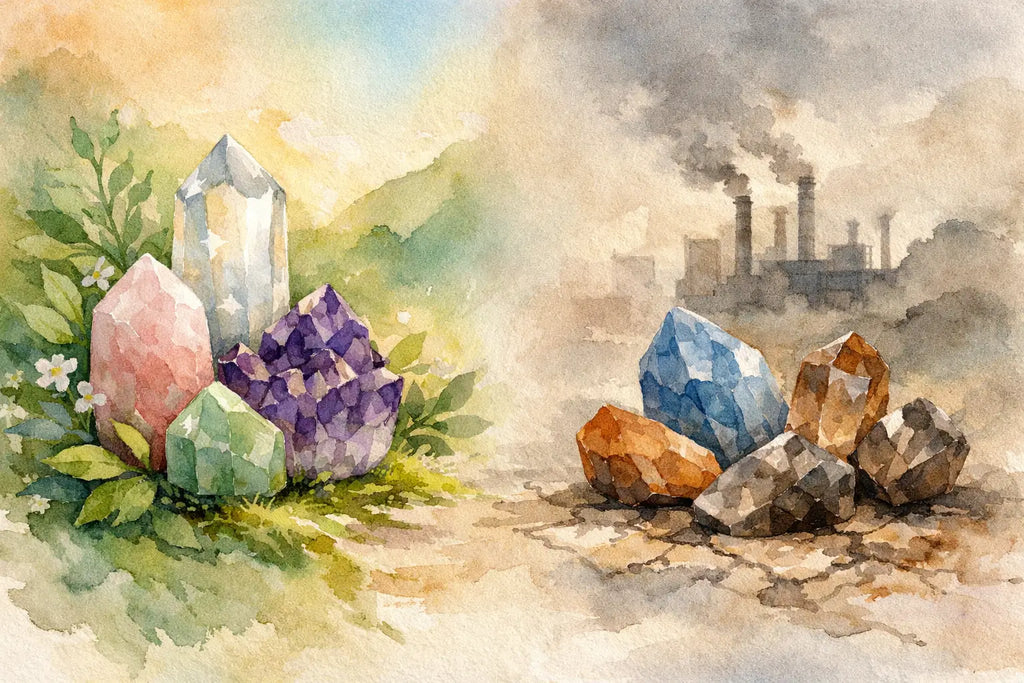
A crystal can look beautiful in a photo and still leave you with questions once it arrives. The polish may feel waxy, the color may seem oddly bright, or the piece may simply feel like one more item pulled from a warehouse bin. That is usually where the conversation around ethical crystals vs cheap crystals becomes very real - not as a trend, but as a buying decision that affects quality, trust, and the meaning behind what you bring into your home.
For many buyers, price is the first thing they notice. That makes sense. If two towers or palm stones appear similar on a screen, the lower price can feel like the obvious choice. But crystals are not interchangeable in the way mass-produced goods often are. Behind every piece is a chain of decisions about mining, handling, cutting, grading, and selling. Those decisions shape more than cost. They shape the story, integrity, and long-term value of the crystal itself.
What ethical crystals vs cheap crystals really means
This is not simply a question of expensive equals good and inexpensive equals bad. Some crystals are naturally more abundant, easier to shape, or sourced in ways that keep pricing accessible without sacrificing integrity. At the same time, some very cheap crystals are cheap for reasons that deserve a closer look.
Usually, ethical crystals are sold with more care around sourcing, identification, and presentation. A seller may know the region a piece came from, work with trusted suppliers, or maintain standards for how materials are cut and finished. Cheap crystals, especially in bulk marketplaces, are more likely to be treated as generic inventory. They may be bought by weight, mislabeled, dyed, heat-treated without clear disclosure, or pushed through a fast supply chain where the origin is vague by design.
That difference matters because crystals are deeply personal purchases. Some people collect for mineralogical beauty. Some buy for spiritual practice. Some are choosing a gift that needs to feel meaningful. In all of those cases, a crystal with a known story and honest representation carries a different kind of value than one selected only because it was the lowest-priced option in a crowded listing.
Why cheap crystals often cost less
There are practical reasons some crystals are priced lower. Material quality may be lower, with more fractures, weaker color, poor symmetry, or cloudy finishes. Cutting and polishing may be rushed. The supplier may produce very high volumes, which lowers the per-piece cost but often reduces individual attention.
There can also be less transparency throughout the supply chain. When sellers do not invest in traceability, education, or careful curation, they save time and money. That lower price can be passed on to the buyer. The trade-off is that the customer often receives less confidence in what the piece actually is, where it came from, and whether any treatments were involved.
Sometimes the issue is not unethical sourcing in a dramatic sense. It is indifference. A crystal becomes just another product, stripped of context and selected for speed rather than care. For shoppers who want a piece that feels intentional, that difference is hard to ignore once they have experienced both ends of the market.
The quality difference you can actually see
The clearest contrast in ethical crystals vs cheap crystals is often visible before you know anything about sourcing. Premium, responsibly selected pieces tend to have stronger presence. The shape feels balanced. The polish is clean rather than slick. The matrix, inclusions, or natural variations look like part of the stone's character, not damage disguised by lighting.
Cheap crystals can sometimes photograph well and disappoint in person. Colors may be flatter or artificially intense. Points may be uneven. Carvings can feel generic and repetitive. In lower-end stock, pieces are often sorted for speed instead of beauty, so you may receive something technically acceptable but not especially special.
That does not mean every ethical crystal is flawless. In fact, many collectors love natural quirks because they make a specimen more individual. The difference is that in a curated shop, those features are usually presented honestly. A rain-like veil in quartz, a rough edge on a raw formation, or natural zoning in fluorite becomes part of what makes the piece distinct. There is respect for the crystal as it is, rather than pressure to make everything look artificially perfect.
Ethical sourcing is about people too
When people hear ethical sourcing, they sometimes think only about environmental concerns. That is part of it, but it is also about labor, relationships, and accountability. Crystals do not appear in online shops by magic. They are mined, transported, cut, cleaned, packed, and sold through human hands.
An ethical approach asks better questions. Was the material sourced through suppliers who know their mining partners? Are artisans paid fairly for the shaping and polishing work they do? Is the seller transparent when origin details are limited instead of inventing a cleaner story than they can support?
No retailer can control every step perfectly, especially in a global supply chain. That is the honest truth. But there is a meaningful difference between a business that tries to build trusted relationships and disclose what it knows, and one that relies on opacity because opacity protects margins.
For many shoppers, that alone is worth paying more for. Not because they expect perfection, but because they want their purchase to reflect care rather than convenience.
Energy, intention, and buyer trust
If crystals are part of your spiritual practice, the source of a piece may matter on an emotional level as much as a practical one. Many people want to feel aligned with what they are bringing into their space. That does not mean a lower-priced crystal cannot be cherished or meaningful. It means that trust affects connection.
When you know a seller has chosen a piece thoughtfully and represented it honestly, it is easier to form a bond with it. There is less second-guessing. You are not wondering whether the stone was dyed, mislabeled, or pulled from anonymous overstock. That clarity creates room for intention.
Even collectors who are less focused on metaphysical properties tend to feel this in their own way. Trust changes the buying experience. It turns a crystal from a random object into a piece with presence, provenance, and purpose.
When paying more is worth it - and when it may not be
Not every purchase needs to be collector-grade. If you are buying a small tumbles set for a classroom activity or a beginner gift, a simpler piece may be perfectly appropriate. Budget matters, and accessible price points have a place in the crystal world.
The question is whether the lower price reflects honest simplicity or hidden compromise. A common, untreated stone with modest polish can still be a lovely buy. A suspiciously cheap rare mineral, a neon-bright agate with no treatment disclosure, or a bulk listing with stock photos and vague descriptions is a different situation.
Paying more tends to be worth it when the piece is meant to mark a moment, anchor a practice, elevate a collection, or be displayed and treasured for years. In those cases, quality and sourcing are not extras. They are part of the value.
This is where a curated shop makes such a difference. Instead of scrolling through endless generic listings, you are choosing from pieces that were selected because they offer beauty, character, and confidence. Bellissima Crystals was built around that kind of intentional curation, because the right crystal should feel personal, not interchangeable.
How to shop with more confidence
You do not need to become a geologist to shop wisely. Start by paying attention to how a seller talks about their inventory. Do they share origin information when available? Do they disclose treatments clearly? Do photos look like the actual piece, or like a factory sample repeated across dozens of listings?
It also helps to notice whether the shop feels relational or purely transactional. Sellers who care about quality usually care about customer experience too. They answer questions directly, package thoughtfully, and present crystals as individual pieces rather than anonymous stock.
Finally, trust your reaction. If a price seems unusually low for the material, there is usually a reason. Sometimes that reason is harmless. Sometimes it points to lower grade, poor finishing, or murky sourcing. A little pause before purchase can save disappointment later.
Choosing between ethical crystals and cheap crystals is really choosing what kind of buying experience you want. If you want something quick and disposable, the cheapest option will always be there. If you want a piece that feels honest, beautiful, and selected with heart, it is worth slowing down long enough to choose well.


