How to Shop the Crystal Market With Intention
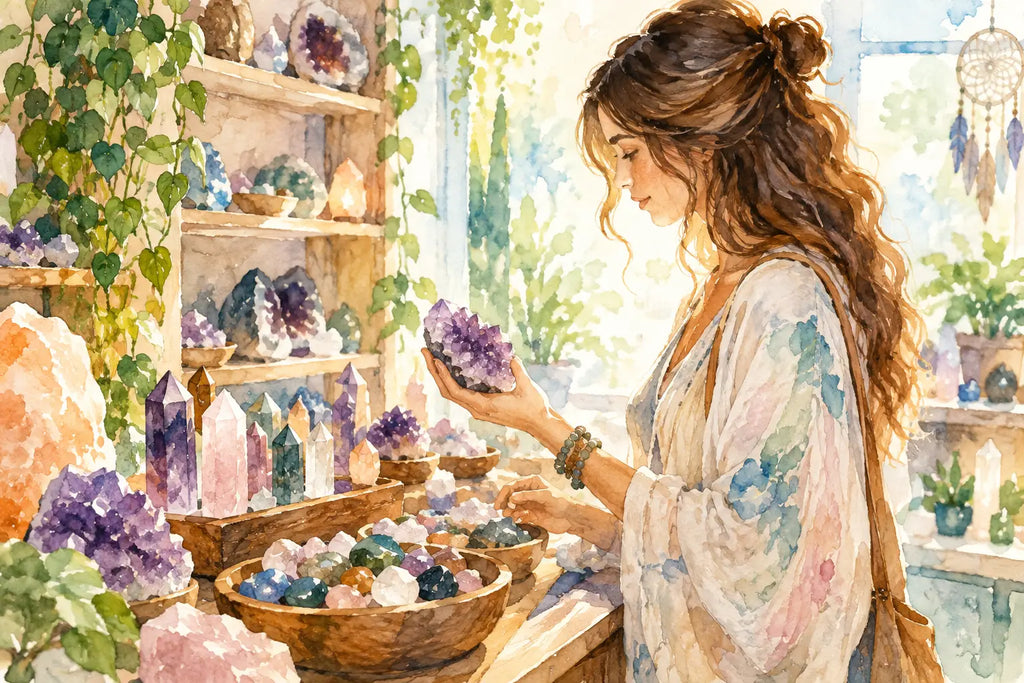
A crystal can look perfect in a photo and still feel entirely different when it arrives in your hands. Its weight, the way light catches an inclusion, the quiet detail of a raw edge - these are the things that turn a purchase into a piece you want to keep. The crystal market offers more choice than ever, but that abundance can make it harder to recognize what is truly special.
For collectors, spiritually minded shoppers, and thoughtful gift-givers, shopping well is less about finding the biggest piece for the lowest price. It is about understanding what you are seeing, asking the right questions, and choosing a crystal with a story and character that feels right for you.
The crystal market has grown, and so has the need for discernment
There is something wonderful about having access to minerals from around the world. A shopper can find sparkling amethyst clusters, softly polished rose quartz, dramatic fluorite, grounding smoky quartz, and rare specimens that once would have been difficult to encounter outside a gem show. Social selling and online shops have also made the crystal community feel more connected, allowing people to share collections, learn about new finds, and celebrate the excitement of a long-awaited package.
But a larger crystal market also brings a wider range of quality, information, and sourcing practices. Some sellers carefully identify minerals, disclose treatments, and build lasting relationships with miners and artisans. Others rely on generic descriptions, heavily edited photos, or inventory selected primarily for speed and volume.
That difference matters. A crystal is not just a category name on a shelf. It is a natural material shaped by geology, then often by skilled hands. Each piece has its own color variation, growth pattern, texture, and history. When those details are treated with care, the experience of collecting feels more personal and more trustworthy.
Quality is more than size, shine, or price
It is easy to assume that a larger crystal is automatically better, or that a flawless polished surface is the clearest sign of quality. Sometimes that may be true for a particular piece or collecting goal. Often, though, quality depends on what you value.
A collector may be drawn to a rare formation, an unusual locality, or a sharply defined crystal habit. Someone choosing a piece for a bedside table may care most about color, calm presence, and how it fits into their space. A gift buyer may want something beautiful enough to feel memorable while still being approachable for a first-time crystal owner.
Natural inclusions, small pits, uneven edges, and color zoning are not necessarily flaws. They can be part of what makes a mineral unmistakably its own. A clear quartz point with a veil inside it, for example, may be more compelling than one with a perfectly uniform appearance. A raw specimen may have a little matrix attached, showing the environment in which it formed. The right piece is not always the most polished one. It is the one whose character speaks to you.
Ask about treatments and material identity
Honest disclosure is one of the simplest signs of a thoughtful seller. Some crystal materials are heated, dyed, coated, stabilized, or otherwise enhanced to achieve a certain color or finish. Treatments are not automatically negative, especially when a shopper loves the look and the price reflects the material accurately. The issue is transparency.
A trustworthy description should help you understand whether a piece is natural, polished, carved, dyed, aura-coated, heat-treated, or lab-created. It should also identify the material as precisely as possible when that information is available. You deserve to choose with clarity, whether you are building a serious mineral collection or selecting a cheerful piece simply because it makes you smile.
Ethical sourcing belongs in the conversation
Crystals begin far before a listing photo. They are mined, sorted, transported, cut, polished, and packed by people. Responsible sourcing can be complicated because mineral supply chains are global and vary widely by region, mine, and material. No retailer can reduce that complexity to a single perfect label.
Still, care shows up in meaningful ways. It can mean working with suppliers who share origin information, maintaining relationships with small miners and artisans, avoiding vague claims that cannot be supported, and selecting inventory with more thought than a bulk shipment allows. It can mean paying attention to how pieces are handled and choosing partners who value the people behind the material.
For shoppers, the goal is not to interrogate every purchase until the joy disappears. It is to support businesses willing to be open about what they know, what they are still learning, and why they chose a particular piece. Ask where a crystal came from when origin matters to you. Ask how it was finished. Notice whether a shop speaks about sourcing with specific care rather than broad promises.
At Bellissima Crystals, that attention is part of the heart behind curation. A piece should feel beautiful on arrival, but it should also come with the reassurance that it was selected with intention, not treated as anonymous inventory.
Shop for connection, not someone else’s collection
The most impressive shelf online may not resemble the collection that feels meaningful in your own home. Your preferences are allowed to be personal. Perhaps you love pale, soothing colors and simple tumbles. Perhaps you collect raw mineral specimens because their formations fascinate you. Perhaps you are looking for a substantial statement piece that becomes part of a room.
If you are new to crystals, begin with what genuinely draws your eye. Read the mineral name, look closely at the photos, and consider where the piece will live. A palm stone may be lovely for a desk or pocket. A tower can bring height and color to a display. A raw cluster may feel especially at home among books, plants, or other collected objects.
Many people also connect crystals with intentions such as grounding, love, clarity, or protection. Those meanings can offer a beautiful moment of reflection, ritual, or encouragement. They should not replace professional medical, financial, or mental health support, but they can help you choose a piece that represents what you want to hold close. There is room for both wonder and practical care.
Let the details guide your decision
When shopping online, good photos are essential, but a few practical details create even more confidence. Look for measurements, weight when relevant, and images that show multiple angles. Consider scale carefully: a two-inch point can be charming and powerful in a small space, while a larger specimen needs room to be appreciated.
It also helps to know whether you are choosing the exact piece pictured or a representative item from a batch. Neither approach is wrong. Exact-piece shopping is especially satisfying when pattern, color, and formation are central to the appeal. Intuitively selected pieces can be a lovely option when you welcome surprise and trust the curator to choose within your preferences.
Do not rush past the return, shipping, and packaging information, either. Fine points and delicate clusters need thoughtful packing. A premium experience includes the practical side of care, from clear communication to making sure a fragile treasure reaches you safely.
A meaningful piece does not need to be rare
Rare minerals can be thrilling, especially for collectors who appreciate locality, crystal structure, and the wonder of finding something uncommon. Yet rarity is only one kind of value. A familiar piece of amethyst can become deeply meaningful because it was a gift, a marker of a new chapter, or the first crystal that made someone feel seen.
The best collections are not built overnight or defined by what other people think you should own. They grow through curiosity, memory, and the small joy of choosing well. Let your next crystal be one that feels beautiful to you, comes from a source you can feel good supporting, and leaves you with the sense that it was meant to find its way home.