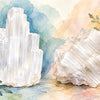
Selenite Versus Satin Spar: How They Differ

A luminous white wand catches the light on a shelf, and its label says selenite. Another shop calls an almost identical piece satin spar. If you have ever paused over selenite versus satin spar, you are not being picky - you are asking a genuinely useful question about what you are bringing into your collection.
The short answer is that both are forms of gypsum, a soft mineral made of calcium sulfate and water. The more complete answer is that their crystal habits, appearance, and collector appeal can be quite different. Understanding the distinction helps you choose a piece for its true beauty, care for it properly, and shop with the confidence that comes from knowing what you love.
Selenite Versus Satin Spar: The Mineral Difference
Selenite and satin spar are both gypsum. They are not separate minerals with separate chemical formulas. What changes is the way the gypsum has grown.
In mineralogical use, selenite usually refers to clear, transparent, or translucent gypsum that forms in broad, blade-like crystals or crisp crystal plates. Fine selenite can look almost like frozen water or glass, with visible crystal faces and a luminous clarity. Some specimens form dramatic clusters, while others appear as flat desert rose formations mixed with sand.
Satin spar is gypsum that grows in tightly packed fibers. Those fibers create its familiar silky sheen, often with a glowing band of light that seems to move across the surface as you turn it. This optical effect is called chatoyancy. Satin spar is commonly carved into towers, bowls, hearts, moons, and the much-loved cylindrical wands often sold under the name “selenite wand.”
The naming gets confusing because “selenite” has become a popular retail umbrella term for white gypsum carvings, including fibrous satin spar. That does not necessarily mean a seller is trying to mislead anyone. It is often a matter of common language rather than strict mineral classification. Still, a careful listing should tell you whether a piece is clear crystalline selenite, fibrous satin spar, or simply gypsum if the exact habit is uncertain.
How to Tell Them Apart at a Glance
Look first at the surface. True crystalline selenite tends to show flatter, clearer planes, sharper edges, and a glassier or pearly luster. It may be colorless, milky white, peach, or lightly tinted by inclusions. Its appeal lies in structure: a collector can often see how the crystal developed.
Satin spar has a softer-looking finish. Rather than broad transparent faces, it shows fine parallel fibers that resemble spun silk, polished bone, or a beam of moonlight held inside the stone. It is usually opaque to translucent, most often white, though peach, orange, gray, and greenish forms also occur.
Shape can offer a clue, but it is not proof. A clear, naturally formed blade is more likely to be selenite. A smooth white wand with long linear striations is almost certainly satin spar. Yet both materials can be cut, polished, or left raw, so appearance should always matter more than the product shape alone.
Why the distinction matters to collectors
If you are drawn to mineral specimens, the difference can be significant. Selenite often showcases distinct crystal architecture and can make a beautiful focal point in a cabinet or on a display stand. Large transparent crystals may have a more specimen-driven feel, especially when they retain natural edges, internal veils, or a layered formation.
Satin spar is often chosen for tactile beauty and gentle glow. A well-finished satin spar carving can look elegant on a nightstand, altar, desk, or gift table, and its silky surface gives even a simple shape a sense of quiet presence. It is also usually easier to find in substantial sizes than transparent, well-formed selenite.
Neither is inherently better. A collector may prefer selenite for its crystal faces and geological story, while someone building a calming personal space may be drawn to the soft, luminous look of satin spar. The right piece is the one whose form, condition, origin, and feeling speak to you.
Shared Meaning, Different Visual Energy
In crystal traditions, both selenite and satin spar are often associated with clarity, peaceful environments, intention-setting, and energetic cleansing. Their pale color and reflective quality naturally lend themselves to these symbolic associations. Many people place them near entryways, meditation spaces, bedside tables, or other areas where they want a visual reminder to slow down and reset.
Because the materials are both gypsum, many shoppers work with them in similar ways. A satin spar wand may be used as a meaningful centerpiece for a ritual space, while a clear selenite plate may feel especially suited to holding smaller treasured objects. Some people enjoy placing jewelry or other crystals nearby as part of a personal cleansing practice.
These meanings are personal and spiritual rather than scientifically established health treatments. Let the ritual serve your own sense of reflection, comfort, and beauty, while continuing to seek qualified professional support for medical, mental health, or financial concerns.
There can also be a subtle aesthetic difference in how people connect with them. Selenite feels crisp, architectural, and otherworldly to many collectors. Satin spar feels softer, warmer, and more touchable. That distinction is not a rule, but it may help when you are choosing between a clear raw specimen and a silky carved piece.
Caring for Selenite and Satin Spar
Their shared gypsum composition means they need the same gentle handling. Gypsum ranks around 2 on the Mohs hardness scale, so it scratches easily. It can also be damaged by prolonged contact with water. A quick accidental splash is not always disastrous, but soaking, rinsing, or leaving either material in a humid bathroom is not a good idea.
Keep both selenite and satin spar dry, and clean them with a soft, dry microfiber cloth or a gentle dry brush. Avoid saltwater, water baths, abrasive cleaners, and rough polishing cloths. If dust settles in the fibers of satin spar, use a very soft brush with a light touch rather than pressing into the surface.
Store gypsum pieces apart from harder minerals such as quartz, amethyst, or fluorite. A separate padded compartment, soft pouch, or carefully arranged shelf protects them from scratching and chipping. If you use a selenite or satin spar plate to hold jewelry, choose lightweight pieces and lift them rather than sliding them across the surface.
Sun exposure is another case where moderation is wise. Brief indirect daylight is generally fine for display, but intense, extended sunlight can create heat and may affect the appearance of some minerals over time. A softly lit shelf allows the sheen of satin spar and the translucence of selenite to shine without unnecessary risk.
What to Look for When Buying
A beautiful gypsum piece should be described honestly, photographed clearly, and handled with care from source to shipment. For satin spar, look for a visible silky flash, tidy carving work, and a form that feels balanced rather than rushed. Natural seams and small variations are normal, especially in raw pieces, but major cracks should be disclosed.
For selenite, consider whether you want clarity, dramatic crystal formation, size, or an unusual locality. Inclusions, internal fractures, and delicate edges are part of the material’s natural character, not automatically flaws. A transparent specimen may be more fragile than it looks, while a cloudier piece may have a particularly beautiful shape or presence.
Sourcing matters, too. Ask whether the seller can speak thoughtfully about where the material comes from and whether its pieces are selected with attention rather than treated as anonymous bulk inventory. Responsible sourcing is not just a location printed on a tag. It includes long-term relationships, fair communication, careful handling, and transparency about what the material is.
At Bellissima Crystals, that thoughtful selection is part of the joy: finding pieces that honor the mineral itself while still feeling personal enough to become part of your home, collection, or gift story.
So, Which One Should You Choose?
Choose selenite when you want visible crystal faces, transparency, raw mineral character, or a specimen with a more geological presence. Choose satin spar when you love silky fibers, a glowing polished finish, and shapes that feel smooth and comforting in the hand.
And if a piece is labeled selenite but looks fibrous and luminous, it may simply be satin spar using the more familiar retail name. The most meaningful question is not whether one name is more magical than the other. It is whether the seller is clear, the piece is cared for, and its natural beauty feels like it belongs with you.
Let yourself take a moment with the photographs, notice the details, and choose the gypsum piece that keeps drawing your eye back. That small pull of connection is often where a collection begins.