Online Crystal Auctions: Bid With Confidence
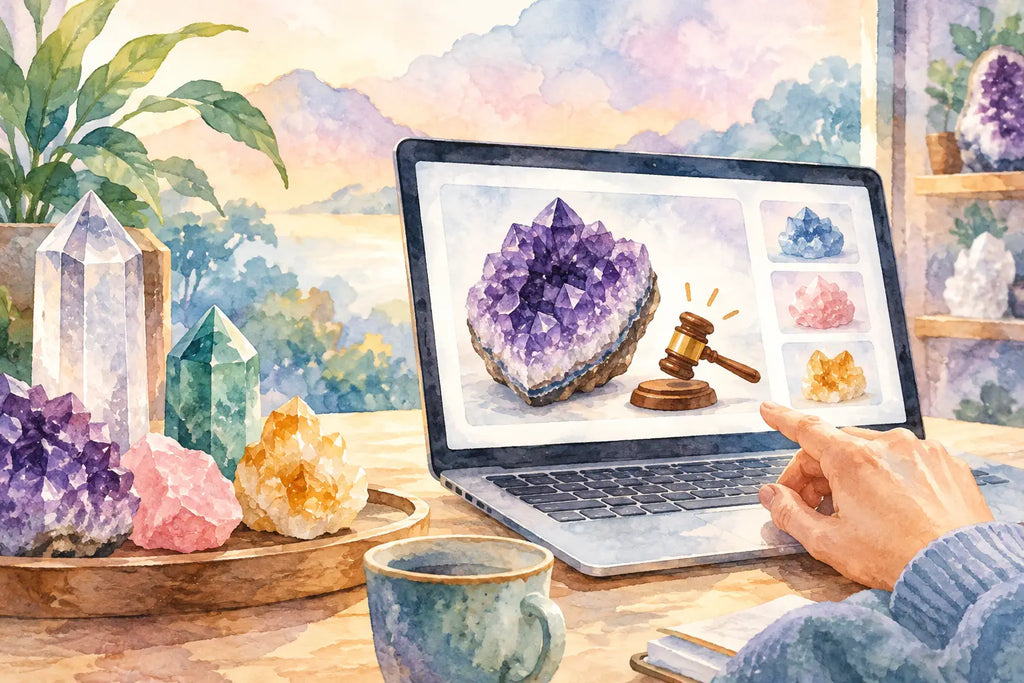
A luminous fluorite tower with unusual banding. A raw amethyst cluster with intact points. A one-of-a-kind mineral specimen that feels like it was waiting specifically for your shelf. Online crystal auctions can make those moments possible, but the quick pace can also make it easy to buy from urgency rather than intention.
The best auction purchases are not necessarily the pieces that receive the most bids. They are the pieces you understand, genuinely love, and feel good about welcoming into your collection. Whether you are shopping for a meaningful gift, your first display-worthy crystal, or a rare specimen with collector appeal, a thoughtful approach protects both your budget and your joy.
What Makes Online Crystal Auctions So Special?
Unlike a standard product listing, an auction creates a brief window around a specific piece. You are often seeing the exact crystal you may receive, including its natural formations, color variation, inclusions, and personality. For collectors, that specificity is part of the appeal. No two druzy pockets, smoky quartz points, or tourmaline striations are exactly alike.
Auctions can also introduce you to pieces that do not fit neatly into a typical collection. Perhaps it is an unusually sculptural raw specimen, a premium polished freeform, or a mineral that is harder to source in exceptional quality. A well-curated auction gives these pieces room to be appreciated individually rather than treated as interchangeable inventory.
That said, an auction format is not always the best fit. If you need a crystal by a certain date, prefer time to compare several options, or are still discovering what you are drawn to, a regular shop collection or an intuitively selected piece may feel more relaxed. There is no prize for bidding quickly. The right experience is the one that helps you choose with clarity.
Start With the Seller, Not the Starting Bid
A low opening bid can be exciting, but it should never be the main reason you participate. Before placing a bid, look at how the seller presents their crystals. Clear photos, accurate dimensions, material details, and condition notes show respect for the buyer and for the specimen itself.
Ask yourself whether the seller is transparent about sourcing and whether they seem to understand the pieces they offer. Ethical sourcing is not a decorative phrase. It reflects real relationships with miners, lapidaries, artisans, and suppliers, as well as care around how a crystal moves from the earth to your home. When a seller can speak honestly about origin, treatment, quality, and known imperfections, you have a stronger foundation for buying with confidence.
It is also wise to understand the practical policies before the excitement begins. Check shipping timelines, insurance or loss policies when applicable, payment expectations, and return terms. Natural crystals can have fractures, pits, mineral inclusions, and uneven surfaces. Those features may be part of their beauty, but they should not come as a surprise.
Look Closely at Photos and Video
A beautiful image is helpful. Several honest images are better. Look for photographs from more than one angle, close-ups of key features, and a clear sense of scale. A palm-sized sphere and a large statement sphere can look surprisingly similar without a ruler, hand shot, or dimensions for context.
Video is especially useful for crystals with flash, chatoyancy, translucence, or shifting color. Labradorite, moonstone, sunstone, and certain fluorites can look dramatically different as the light moves. A brief video helps you see whether the effect is visible from a pleasing angle or only appears under very specific lighting.
Pay attention to the words used in the listing. A natural crack, a repaired break, and a surface-level irregularity are not the same thing. Neither are “inspired by,” “coated,” and naturally occurring color. Reputable sellers do not need to hide those distinctions. In fact, the details often make a piece more interesting.
Know What You Are Bidding On
You do not need a geology degree to become a thoughtful buyer. You simply need enough context to recognize what you value. Some shoppers want a polished piece with a smooth finish and strong color. Others prefer untouched raw formations, matrix, and the evidence of a crystal's journey from the earth. Both preferences are valid, and they can lead to very different price expectations.
Consider the factors that commonly shape value: size, color saturation, clarity, formation, rarity, damage, polish quality, and locality. For a collector-grade mineral specimen, an unusual formation or verified locality may matter more than sheer size. For a display piece, balance, visual impact, and craftsmanship may be the deciding factors.
Treatments deserve special attention. Heat treatment, dyeing, aura coating, stabilization, and carving can all change appearance or durability. These practices are not automatically negative, especially when they are clearly disclosed and fairly priced. The concern is a lack of transparency. You deserve to know whether you are purchasing a natural untreated amethyst, a dyed agate, or a treated material offered for its bold artistic color.
Set a Ceiling Before the Bidding Starts
Auction energy is real. So is the temptation to bid one more time because you have already invested attention in a piece. Setting a maximum before the auction begins is one of the kindest things you can do for yourself.
Choose a number that includes more than the bid. Account for shipping, taxes, any buyer fees, and the value you personally place on the piece. A rare mineral might be worth stretching for if it has been on your wish list for years and the condition is exceptional. A pretty piece you discovered five minutes ago may not deserve the same flexibility.
If you are bidding in a live sale, take a breath before commenting or tapping. Ask: Would I still feel happy about this purchase tomorrow? Does it fit the collection I am building? Am I responding to genuine connection, or to the fear that someone else will get it first?
The answer may still be yes, and that is wonderful. Intentional collecting is not about removing emotion. It is about making room for emotion and discernment to work together.
Let the Piece Be Enough
It can be tempting to chase every beautiful item that appears, especially in a fast-moving auction. Yet a collection feels more personal when each piece has a reason to be there. Maybe you are collecting minerals from a certain region, building a calming bedside display, or choosing stones whose colors make your home feel more like you.
You do not need to win often to collect well. Passing on a piece can be a sign of confidence, not hesitation. Another crystal will arrive, and it may be an even better match for your space, your budget, or the meaning you want your collection to hold.
After You Win: Receive Your Crystal With Care
When your package arrives, unbox it over a clear, soft surface and take your time. Compare the piece with the listing photos, especially if it had defining details such as a specific flash pattern, formation, or natural inclusion. If you notice shipping damage, photograph the packaging and the crystal promptly, then contact the seller according to their policy.
For most pieces, a soft dry cloth or gentle brush is enough for display care. Avoid water unless you are certain the mineral can handle it. Selenite, malachite, halite, pyrite, and many softer or porous stones need special consideration. Keep delicate specimens away from direct sun, high shelves, and crowded display areas where they can be knocked over.
At Bellissima Crystals, we believe a crystal should feel like more than an item added to a cart. It should carry beauty, care, and a story you are happy to bring home. That standard is worth carrying into every auction you join.
The most meaningful bid is not always the highest one. It is the one you place with open eyes, a clear budget, and a genuine sense that this particular piece belongs with you.