Which Crystals Cannot Get Wet? Crystal Care

A beautiful crystal can look perfectly solid and still be surprisingly vulnerable to water. If you have ever wondered which crystals cannot get wet, the short answer is that many soft, porous, layered, or mineral-rich specimens are better kept completely dry. Water can dull a polished finish, weaken a delicate formation, cause flaking, or, in some cases, slowly dissolve the mineral itself.
That does not mean a single raindrop will ruin every sensitive stone. The real concern is soaking, rinsing, leaving a crystal in a bath, or repeatedly exposing it to moisture. Thoughtful care protects the natural beauty that made you choose the piece in the first place.
Which Crystals Cannot Get Wet?
Some crystals should never be intentionally placed in water. Their mineral structures react poorly to moisture, even when a piece appears hard or polished. Others can tolerate a very brief accidental splash but should not be soaked, scrubbed, or used in water-based cleansing rituals.
Selenite and other gypsum varieties
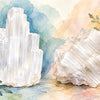
Selenite is beloved for its soft glow, satin-like striations, and peaceful presence, but it is one of the clearest examples of a crystal that should stay dry. Selenite is a variety of gypsum, a relatively soft mineral that can become dull, pitted, or damaged when exposed to water. Satin spar, desert rose, and other gypsum formations deserve the same care.
Instead of rinsing selenite, use a soft, dry microfiber cloth or a very soft brush to remove dust. Store it away from humid bathrooms, damp windowsills, and drink spills.
Halite
Halite is natural salt crystal, so water can dissolve it quickly. Even high humidity may affect delicate halite specimens over time. Its cubic shapes and translucent color make it fascinating to collect, but it is a display piece that benefits from a dry, protected home.
Avoid placing halite near a diffuser, in a bathroom, or in an area where condensation is common. Handle it with clean, dry hands whenever possible.
Calcite, including orange, green, and honey calcite
Calcite is softer than many popular crystals and can react with water, especially if that water is acidic or mineral-heavy. Prolonged exposure may etch its surface, soften its shine, or affect delicate cleavage planes. This is especially relevant for raw calcite clusters and finely carved pieces.
A quick, accidental splash is not always catastrophic, but drying it promptly is wise. For regular cleaning, choose a dry cloth rather than water.
Malachite and azurite
Malachite and azurite are copper-bearing minerals, and they are not good candidates for soaking. Water can contribute to surface changes over time, particularly on raw, porous, or fragile specimens. These stones also deserve careful handling because mineral dust should never be inhaled or ingested.
Keep malachite and azurite dry, and do not make crystal-infused water with them. If a piece needs cleaning, use a dry, gentle cloth and avoid abrasive polishing methods.
Lepidolite and mica-rich stones
Lepidolite often contains mica, which gives it that lovely shimmer and layered look. Those layers can separate or flake when repeatedly exposed to water. Other mica-rich minerals can be similarly delicate, especially in raw or natural formations.
These are crystals to admire, hold gently, and display with care rather than rinse under a faucet.
Angelite, celestite, and soft blue specimens
Angelite, also known as anhydrite, is best kept dry because water can alter its structure. Celestite is another collector favorite that can be delicate, brittle, and sensitive to prolonged moisture. Their soft blue coloring and airy formations make them especially lovely on a shelf or altar, but they are not bath companions.
If you display these pieces in a calming space, simply keep them away from sinks, open windows during storms, and humidifiers.
Pyrite and other minerals that may oxidize
Pyrite has a bold metallic luster, but moisture can encourage oxidation in certain conditions. Over time, this can lead to discoloration, surface breakdown, or a powdery appearance. Storage matters as much as cleaning does - pyrite is happiest in a dry environment with stable humidity.
For valuable or especially delicate mineral specimens, it is worth treating water exposure as a risk rather than a routine part of care.
Why Water Damages Certain Crystals
A crystal's Mohs hardness can offer a clue, but it is not the whole story. Hardness measures resistance to scratching, not how a mineral responds to water, humidity, acids, temperature changes, or internal fractures. A stone may feel substantial in your hand while still being porous, layered, reactive, or soluble.
Water itself is also not always neutral. Tap water may contain minerals, chlorine, or trace chemicals that leave residue on a polished surface. Salt water can be even harsher, while hot water may stress a stone that has natural cracks or treatments. A crystal that has been dyed, coated, stabilized, or glued into a cluster needs additional caution.
That is why “water-safe” should never be treated as a blanket label. The exact mineral, its finish, its condition, and how long it is exposed all matter.
Crystals to Treat With Extra Caution
Some stones are not as immediately water-sensitive as halite or selenite, yet they still benefit from a dry-care approach. Fluorite can be affected by long soaking, and its natural cleavage makes it prone to chipping. Lapis lazuli is often porous and may contain pyrite or calcite, so a quick wipe is safer than submerging it. Turquoise, chrysocolla, rhodonite, and many softer or porous minerals can also lose their finish or absorb residue over time.
For these pieces, a brief accidental contact with clean water may be manageable if you blot them dry right away. Still, there is little benefit to testing the limits of a treasured crystal. When you are unsure, dry cleaning is the more loving choice.
Gentle Ways to Cleanse Crystals Without Water
Water cleansing is only one tradition, and it is never required. There are many meaningful ways to refresh a crystal while preserving its natural condition.
Place your piece on a clean windowsill for soft moonlight, if the mineral is not known to fade in light. Pass it through incense or smoke if that aligns with your practice, taking care not to leave soot on pale or porous stones. Sound, such as a singing bowl, bell, or gentle music, offers another non-contact option. You may also set an intention while holding the crystal, place it beside a favorite meaningful object, or simply give it a peaceful place to rest.
For physical dust, start with the least invasive method: a soft makeup brush, microfiber cloth, or bulb blower. Use no sprays, oils, cleaners, or salt unless you are certain they are appropriate for that exact mineral.
How to Care for a Crystal After It Gets Wet
If a sensitive crystal is splashed, do not panic. Gently blot it with a clean, absorbent cloth rather than rubbing the surface. Let it air-dry in a cool indoor spot with good airflow, away from direct heat and strong sunlight. Do not use a hair dryer, place it on a radiator, or try to speed up drying with intense heat.
If you notice flaking, whitening, a sticky residue, fading, or a changed texture, leave the piece alone and keep it dry. Further handling or cleaning can sometimes worsen the issue. With rare, fragile, or collector-grade specimens, a mineral conservator can offer the most appropriate guidance.
A Simple Rule for Your Collection
When you do not know exactly what a crystal is made of, assume it should not be soaked. This is especially true for raw clusters, layered specimens, soft carvings, and pieces with a delicate sparkle or fibrous texture. A reputable seller should be able to share the mineral name and relevant care considerations, helping you choose a ritual that honors both your intention and the stone itself.
Your collection does not need water to feel cared for. Sometimes the most meaningful practice is the simplest one: handle each piece gently, keep it dry when in doubt, and let its natural beauty remain exactly as nature formed it.