Which Crystals Need Special Care? A Gentle Guide

A beautiful crystal can look wonderfully sturdy on a shelf, then reveal a much softer side the moment it meets water, direct sun, or a rough cleaning cloth. If you have wondered which crystals need special care, the answer is usually the pieces with delicate structures, water-soluble minerals, vivid natural color, or cleavage planes that make them easier to chip.
Caring for your collection is not about being afraid to enjoy it. It is about learning what each piece needs to stay as radiant as the day it found you. A little awareness protects both the beauty of a specimen and the meaningful connection you have built with it.
Care Begins With the Mineral, Not the Finish
A polished crystal is not automatically tougher than a raw one. Polishing can give a piece a smooth, lustrous surface, but it does not change the mineral beneath it. Likewise, a raw cluster may look fragile yet be quite durable when handled thoughtfully.
Hardness is helpful, but it is not the whole story. Some minerals scratch easily, some dissolve or become dull in water, and others split along natural internal planes called cleavage. A crystal may also contain inclusions, coatings, or delicate points that need extra consideration. When you are unsure, treat a piece gently until you can identify its mineral family and care needs.
Which Crystals Need Special Care Around Water?
Water is one of the most common ways collectors accidentally damage a crystal. It is often recommended in generalized cleansing advice, but it is not a universal method. Never assume that a crystal can be rinsed simply because it came from the earth.
Water-soluble and soft minerals
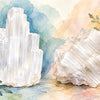
Selenite, often sold as satin spar, is a beloved example. Its soft, silky glow makes it a beautiful choice for a bedside table or sacred space, but soaking or rinsing it can leave it cloudy, rough, or weakened. Dust it with a soft, dry brush or microfiber cloth instead.
Halite is even more sensitive. As a salt-based mineral, it can begin dissolving with moisture from wet hands, a humid room, or a water-based spray. Keep it dry and stored away from bathrooms, kitchens, and open windows in damp weather.
Calcite, angelite, lepidolite, and celestite also deserve a dry-cleaning approach. These minerals may be soft, porous, or prone to changes in texture and luster after water exposure. Their calming appearance can make them feel gentle in every sense, so let their care reflect that.
Minerals that may react or lose their finish
Malachite and azurite should not be soaked, scrubbed, or exposed to cleaning products. Their copper content calls for careful handling, and powders or residue from damaged pieces should never be inhaled. Enjoy them as display specimens, handle them with clean dry hands, and wipe surfaces around them rather than washing the stones themselves.
Pyrite is another piece that benefits from a dry environment. Extended moisture can encourage oxidation, which may create rust-colored changes over time. A dry, stable display area is generally kinder to pyrite than a humid windowsill or a bowl near a water feature.
Fluorite can also be more delicate than its glassy appearance suggests. It scratches relatively easily and may fade or become stressed by harsh treatment. A quick dry dusting is usually all it needs.
Keep Colorful Crystals Out of Harsh Sun
Sunlight can be beautiful on a crystal shelf, but strong, prolonged direct light can soften the color of certain stones. Amethyst, rose quartz, fluorite, kunzite, and celestite are commonly kept away from bright windows for this reason. Their colors can be part of what makes them feel so personal, so preserving that natural beauty is worth a small adjustment in placement.
This does not mean a brief moment of morning light will ruin every piece. The risk depends on the mineral, the intensity of the sun, and how long the crystal is exposed. A sunny room can still hold your collection beautifully. Place sensitive pieces a few feet back from the window, in filtered light, or on a shelf that does not receive hours of direct afternoon sun.
Heat matters, too. Avoid leaving crystals in a hot car, on a radiator, or near a fireplace. Sudden temperature changes can stress some specimens and may contribute to cracks or surface damage.
Delicate Points, Layers, and Cleavage Planes
Some crystals need special care because of how they are formed rather than how soft they are. Kyanite, black tourmaline, and certain quartz clusters may have sharp points or layered structures that can catch on fabric, collide with neighboring stones, or chip if dropped.
Lepidolite often has a shimmery, layered character that is especially lovely under soft light. Those delicate mica-like layers can flake if rubbed or handled roughly. Keep it in a stable spot and avoid carrying it loose in a bag or pocket.
Large clusters and geodes also deserve support from underneath rather than from their points or edges. When moving a specimen, use two hands whenever possible. Hold the base, clear the path to its new place, and set it down slowly. This is a small ritual of care that can prevent an unnecessary break.
A Gentle Cleaning Routine for Most Collections
For many crystals, the safest first step is simple: dust before you do anything else. Use a clean microfiber cloth, a very soft makeup brush reserved for your collection, or a small soft-bristled paintbrush to reach into crevices. Work with a light touch, especially around druzy surfaces, points, and raw edges.
If a durable stone such as clear quartz, agate, or carnelian truly needs more than dusting, use a barely damp soft cloth and dry it immediately. Avoid soaking, dish soap, household cleaners, vinegar, essential oils, and ultrasonic cleaners unless you have confirmed they are appropriate for that exact mineral. These methods can be too harsh even when a crystal looks smooth and solid.
For energetic practices, physical cleaning and spiritual cleansing do not have to be the same thing. You can choose smoke, sound, intention, moonlight, a cleansing plate that stays dry, or simply a quiet moment of gratitude. The best practice is one that feels meaningful to you and does not put the specimen at risk.
Store and Display Crystals With Breathing Room
Crystals can scratch one another, particularly when harder minerals share a bowl with softer stones. Separate delicate pieces with soft pouches, tissue paper, or individual compartments if you are storing them. For display, give points and clusters a little space instead of packing them tightly together.
Keep water-sensitive minerals away from humid areas, and consider a closed display cabinet for especially delicate or rare specimens. This can reduce dust while helping protect pieces from curious pets, little hands, and accidental bumps. A cabinet is not necessary for every collection, but it can be a thoughtful choice for minerals you want to preserve for years.
At Bellissima Crystals, we believe every piece deserves to be enjoyed, not hidden away. The goal is not perfection. It is creating a home for your crystals where their color, structure, and story can be appreciated with confidence.
When You Are Not Sure, Choose the Gentlest Option
Crystal care advice online can be broad, contradictory, and occasionally risky. If you do not know exactly what a crystal is, skip water, salt, and direct sun until you do. A dry cloth, careful placement, and gentle handling are rarely the wrong choice.
Your collection does not need complicated rules to stay beautiful. Give each piece a little patience, notice what it is made of, and let care become part of the relationship you build with the minerals you choose to bring home.